Of course. Here are the English translations and detailed explanations for "手术机器人市场" (surgical robot market), along with key terminology and market insights.
Core Translation
The most direct and common translation is:
- Surgical Robot Market
This is the standard term used in industry reports, news articles, and academic papers.
Key Terminology (相关术语)
Here are essential terms related to the surgical robot market, categorized for clarity.
Types of Surgical Robots (机器人类型)
- Surgical Robot / Surgical System: The general term.
- Robotic-Assisted Surgery System: A very common and precise term, emphasizing that the surgeon is in control.
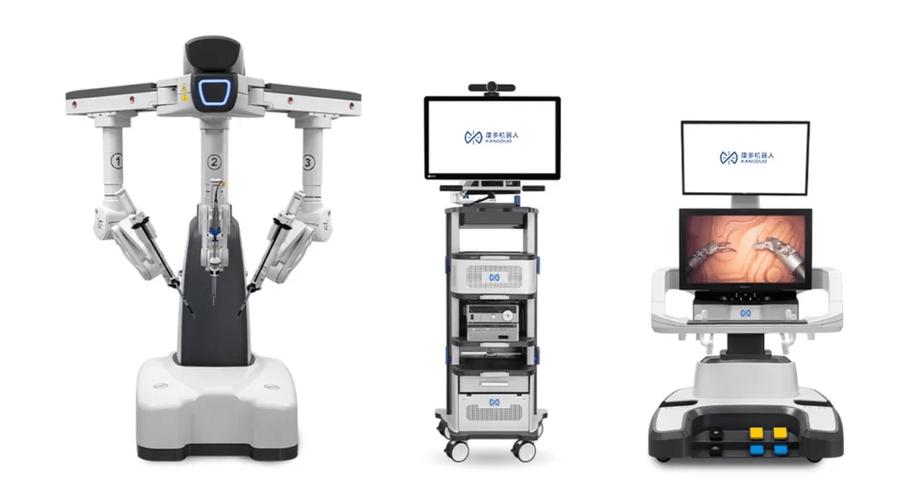
- Laparoscopic Robot / Laparoscopic Surgical System: For minimally invasive abdominal surgeries (e.g., da Vinci system).
- Orthopedic Robot: For joint replacement (knee, hip) and spine surgeries.
- Neurosurgical Robot: For brain and spine surgeries, often for precision in biopsy or tumor removal.
- Cardiac Robot: For heart and chest surgeries.
- Urology Robot: For prostate and other urinary tract surgeries.
- Transoral Robot: For surgeries through the mouth (e.g., for throat cancer).
Market Segments (市场细分)
- Product Type: By the type of robot (e.g., laparoscopic, orthopedic).
- Application/Procedure: By the type of surgery (e.g., urology, gynecology, orthopedics, general surgery).
- End-User: By where the robot is used (e.g., hospitals, ambulatory surgical centers, specialty clinics).
- Geography: By region (e.g., North America, Europe, Asia-Pacific, Rest of the World).
Key Players & Companies (主要公司)
- Intuitive Surgical: The undisputed market leader, famous for its da Vinci Surgical System.
- Stryker: A major player, especially in the orthopedics space with its Mako Surgical System.
- Johnson & Johnson (J&J): Acquired Auris Health (for lung and ear/throat surgery) and Ottava (for orthopedics).
- Medtronic: A large medical device company developing or acquiring robotic systems.
- Zimmer Biomet: Another key competitor in the orthopedic robotics market.
- TransEnterix: Known for its Hugo™ RAS System.
- CMR Surgical: Developing the Versius™ system.
Market Dynamics & Metrics (市场动态与指标)
- Market Size / Market Value: 市场规模 / 市场价值
- Market Share: 市场份额
- Market Growth / CAGR (Compound Annual Growth Rate): 市场增长 / 复合年增长率
- Revenue / Sales: 收入 / 销售额
- Installed Base / Installed Units: 已装机量 / 已装机数量
- Procedure Volume: 手术量
- Reimbursement: 医保报销 / 付款
- Regulatory Approval / FDA Clearance (for the US): 监管批准 / 美国食品药品监督管理局批准
- Minimally Invasive Surgery (MIS): 微创手术
- Value Proposition / Value Chain: 价值主张 / 价值链
Market Overview & Key Insights (市场概览与关键洞察)
Here is a summary of the current state and future trends of the surgical robot market, written in English.
Market Overview
The global surgical robot market is one of the fastest-growing and most dynamic segments within the medical device industry. It is characterized by high capital investment, significant technological innovation, and strong demand for improving surgical precision and patient outcomes.
- Dominant Player: Intuitive Surgical holds a dominant position, particularly in the general laparoscopic robotic surgery market with its da Vinci system. Its ecosystem of instruments, services, and training creates a strong competitive moat.
- High Growth: The market is expanding rapidly, driven by factors like the global rise in chronic diseases, an aging population, and the increasing preference for minimally invasive procedures that offer faster recovery times and reduced complications.
Key Drivers (推动因素)
- Demand for Minimally Invasive Surgery (MIS): Patients prefer smaller incisions, less pain, shorter hospital stays, and quicker recoveries.
- Enhanced Surgical Precision: Robots provide greater precision, stability, and dexterity than the human hand, reducing surgeon fatigue and enabling complex procedures.
- Aging Global Population: Leads to a higher prevalence of conditions requiring surgery (e.g., joint replacements, cancer).
- Favorable Reimbursement Policies: As evidence of cost-effectiveness grows, more governments and insurance providers are approving reimbursements for robotic-assisted surgeries.
- Shortage of Skilled Surgeons: Robots can help standardize complex procedures and make them more accessible.
Challenges (挑战)
- High Cost: The initial purchase price of a surgical robot system can be several million dollars, with significant ongoing costs for maintenance, instruments, and warranties.
- Long Training Curve: Surgeons and their teams require extensive training to become proficient with robotic systems.
- Regulatory Hurdles: Gaining approval from regulatory bodies like the FDA is a lengthy and expensive process.
- Safety Concerns: While rare, technical failures or complications can occur, requiring robust safety protocols.
Future Trends (未来趋势)
- Emerging Competitors: New companies are entering the market with more affordable and modular systems (e.g., Hugo™ by CMR Surgical, Versius™), increasing competition and potentially driving down costs.
- AI and Machine Learning Integration: AI is being used for image guidance, surgical planning, real-time analytics, and predictive outcomes.
- Expansion into New Specialties: While urology and gynecology are mature markets, significant growth is expected in orthopedics, neurology, and general surgery.
- Single-Port and Miniaturized Robots: Development of smaller robots that can operate through a single incision, further reducing patient trauma.
- Telesurgery and Remote Collaboration: Enabling expert surgeons to guide operations from remote locations.
In summary, the surgical robot market is a high-growth, high-investment sector poised for continued expansion, with increasing competition and technological advancements shaping its future.