Of course. Designing a drone is a fascinating process that blends aerodynamics, electronics, software, and industrial design. Here is a comprehensive breakdown of the design process, covering everything from concept to production.
We'll structure this into four main phases:
- Phase 1: Concept & Requirements Definition
- Phase 2: System & Component Design
- Phase 3: Prototyping & Testing
- Phase 4: Production & Iteration
Phase 1: Concept & Requirements Definition (The "Why")
This is the most critical phase. You must clearly define the drone's purpose before a single component is chosen. A drone designed for aerial photography is vastly different from one for agricultural surveying or package delivery.
Key Questions to Answer:
-
Primary Use Case (Mission Profile):
- Aerial Photography/Videography: Requires a stable, smooth platform with a high-quality gimbal.
- Racing: Needs extreme agility, high speed, and durability. Durability is often sacrificed for weight.
- FPV (First-Person View) Freestyle: Similar to racing but focused on smooth, cinematic maneuvers in complex environments.
- Mapping/Surveying: Requires high positional accuracy (often with RTK GPS), a high-resolution camera, and long flight time.
- Inspection (e.g., power lines, wind turbines): Needs specialized sensors (thermal, LiDAR), long range, and obstacle avoidance.
- Agriculture: Requires large payload capacity for spraying or seeding and long flight time.
- Delivery: Needs to be robust in various weather conditions and have a reliable release mechanism.
-
Key Performance Indicators (KPIs):
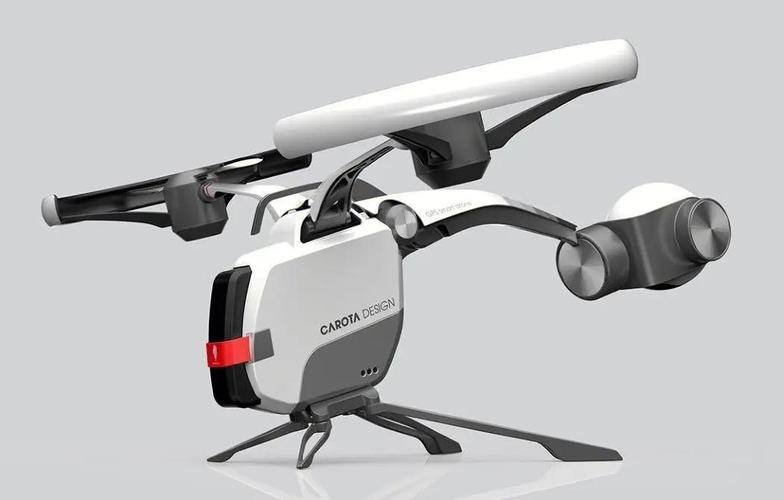 (图片来源网络,侵删)
- Flight Time: 20-30 mins for a consumer drone, 45+ mins for industrial surveying, <5 mins for racing.
- Payload Weight: 0-500g for a GoPro, 1-2kg for mapping cameras, 10kg+ for agricultural drones.
- Max Speed: 15-20 m/s for photography, 50-70+ m/s for racing.
- Range: 1-5 km for consumer drones, 10-20 km+ for industrial or long-range FPV.
- Max Wind Resistance: 5-6 m/s (Level 2) for casual flying, 10-12 m/s (Level 5) for professional work.
- Top Speed: How fast does it need to go?
-
Target Environment & Conditions:
- Indoor/Outdoor?
- Altitude: Flying at sea level vs. 4000m requires different motor and propeller choices.
- Temperature: Extreme cold affects battery performance.
- Regulations: This is crucial. Design must comply with local aviation rules (e.g., FAA Part 107 in the US, EASA in Europe). This impacts weight limits, no-fly zones, and required features like remote ID.
Phase 2: System & Component Design (The "How")
Once the requirements are set, you can select and design the core systems of the drone.
A. Airframe Design (The Frame)
The frame is the drone's skeleton. Its design is a trade-off between weight, strength, aerodynamics, and accessibility.
- Material:
- Carbon Fiber: Strong, stiff, and very light. The standard for high-performance and professional drones. Expensive.
- Glass Fiber (Fiberglass): A good middle ground, cheaper than carbon fiber but heavier.
- Aluminum: Strong and durable, but heavier than composites. Used in some industrial frames.
- Plastic (ABS, Nylon): Cheap and easy to manufacture. Used in many toy and entry-level drones. Less durable.
- Configuration:
- Quadcopter (X+ or H): The most common configuration. Simple, stable, and mechanically straightforward.
- Hexacopter (6 motors): More power and redundancy. If one motor fails, the drone can often still land safely. Popular for heavy-lifting applications.
- Octocopter (8 motors): Even more power and redundancy. Used for very heavy payloads.
- Fixed-Wing (VTOL): Combines the vertical takeoff/landing of a multirotor with the efficient, long-range flight of an airplane. Best for large-area mapping.
- Design Considerations:
- Center of Gravity (CoG): Must be carefully calculated. The battery and main flight controller are usually positioned to achieve the ideal CoG.
- Arm Design: Arms must be strong enough to handle the torque of the motors and the G-forces of maneuvers. They also need to be positioned to protect the propellers from obstacles.
B. Power System (The Heart)
This system provides the energy for flight.
- Battery Chemistry: Li-Ion (Lithium-Ion) or Li-Po (Lithium-Polymer) are the standard. Li-Po offers higher discharge rates (more power) but is less stable. Voltage (S-Cells) and capacity (mAh) are key specs.
- Electronic Speed Controllers (ESCs): These are the "brains" of the motors. They take the low-voltage signal from the flight controller and transform the battery's power into the high-voltage, 3-phase AC current needed to spin the motors. They also handle motor RPM control.
- Motors: Brushless DC motors are the standard. Key specs are KV rating (RPM per volt) and size (e.g., 2207, 2812). A higher KV motor spins faster and is better for speed/agility, while a lower KV motor has more torque and is better for efficiency and lifting heavy payloads.
- Propellers: They generate thrust. They are chosen based on diameter, pitch, and material. Props must be balanced to minimize vibrations. The combination of motor KV, battery voltage, and prop pitch determines the final thrust and efficiency.
C. Flight Controller (The Brain)
This is the drone's onboard computer. It's a small, powerful microcontroller that runs the flight control software.
- Sensors: It integrates an IMU (Inertial Measurement Unit), which includes:
- Accelerometer: Measures linear acceleration.
- Gyroscope: Measures angular velocity (rotation).
- Barometer: Measures altitude by sensing air pressure.
- Magnetometer (Compass): Measures heading relative to Earth's magnetic field.
- Software (Flight Stack): Runs algorithms (like PID controllers) to stabilize the drone. It processes pilot input and sensor data to command the ESCs.
- Key Features: GPS module, telemetry link (to send data to the ground station), voltage and current sensors (to monitor battery health), and ports for connecting other components (cameras, lights, etc.).
D. Avionics & Control (The Nervous System)
This is how the pilot communicates with the drone.
- Radio Transmitter (TX) & Receiver (RX): The TX is the controller held by the pilot. The RX is on the drone and receives the signals. Modern systems use 4 GHz for a reliable, long-range link. Protocols like ExpressLRS and Crossfire are popular for long-range FPV.
- Flight Modes: The flight controller supports different modes (e.g., Angle, Horizon, Acro, GPS, Position Hold).
E. Payload & Specialized Systems (The Tools)
This is what makes the drone useful for its specific mission.
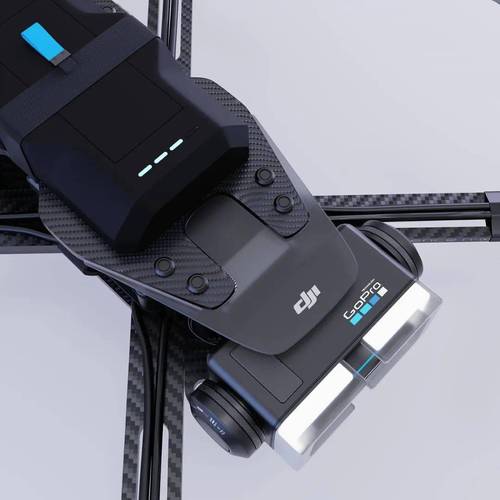
- Gimbal & Camera: For photography, a 3-axis motorized gimbal is essential to keep the camera steady. The camera itself can be anything from a GoPro to a large-sensor cinema camera or a multispectral sensor for agriculture.
- Obstacle Avoidance: Uses sensors like ultrasonic, infrared (IR), or LiDAR to detect and avoid obstacles. Critical for safe autonomous flight.
- GPS/GNSS: For position hold, return-to-home, and waypoint navigation. RTK (Real-Time Kinematic) GPS provides centimeter-level accuracy for surveying.
- Telemetry: Downlinks real-time data to the ground station, such as battery voltage, GPS coordinates, altitude, and speed.
- First-Person View (FPV) System: For immersive flying. It consists of a camera on the drone, a video transmitter (VTX), and goggles or a monitor for the pilot.
Phase 3: Prototyping & Testing (The "Proof")
You build, you fly, you break, you learn.
- CAD Modeling: Create a detailed 3D model of the entire drone. This allows for virtual assembly, weight analysis, and center of gravity calculation.
- 3D Printing/Prototyping: 3D print the frame to quickly test form and fit. CNC machined or molded parts are used for later-stage prototypes.
- Bill of Materials (BOM): Create a detailed list of every single component
标签: 无人机安全设计优化 性能与安全的无人机平衡 无人机设计安全性能兼顾