最简洁的解释
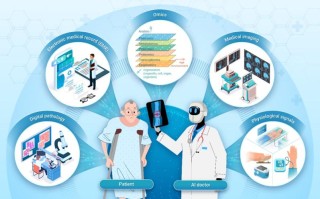
Artificial Intelligence (AI) is the science of making machines smart.
- 中文翻译: 人工智能是让机器变得聪明的科学。
这是一个非常通俗易懂的定义,适合快速介绍。
标准定义
Artificial Intelligence (AI) is a broad field of computer science focused on creating systems capable of performing tasks that typically require human intelligence. These tasks include learning, reasoning, problem-solving, perception, and language understanding.
- 中文翻译: 人工智能是计算机科学的一个广泛领域,专注于创建能够执行通常需要人类智能的任务的系统,这些任务包括学习、推理、解决问题、感知和语言理解。
这个定义更正式、更全面,是教科书或专业场合常用的。
分步详解
如果你想更深入地解释,可以把它拆解成几个部分:
A. What it is (它是什么)
At its core, AI is about building intelligent agents. An "agent" is anything that can perceive its environment through sensors (like cameras, microphones, or data feeds) and take actions to achieve its goals.
- 核心: AI的核心是构建智能体,一个“智能体”是指能通过传感器(如摄像头、麦克风或数据流)感知其环境,并采取行动以达成其目标的任何东西。
B. How it works (它如何工作)
AI systems are not explicitly programmed with step-by-step instructions for every possible situation. Instead, they are typically trained using vast amounts of data and complex algorithms.
-
机器学习: This is the most common approach. AI systems learn patterns from data, improve their performance on a specific task over time, and can make predictions or decisions without being explicitly programmed for that task.
- Example: A spam filter learns to identify spam emails by analyzing millions of examples of spam and non-spam.
- 中文翻译: 这是最常见的方法,AI系统从数据中学习模式,随着时间的推移在特定任务上提高其性能,并且可以在没有被明确编程的情况下做出预测或决策。
- 例子:垃圾邮件过滤器通过分析数百万封垃圾邮件和非垃圾邮件的例子来学习识别垃圾邮件。
-
深度学习: A more advanced subset of machine learning that uses neural networks with many layers (hence "deep") to learn from vast amounts of unstructured data like images, sound, and text.
 (图片来源网络,侵删)
- Example: A self-driving car uses deep learning to recognize pedestrians, traffic signs, and other cars from camera feeds.
- 中文翻译: 机器学习的一个更高级的分支,它使用具有许多层(因此称为“深度”)的神经网络从未经结构化的数据(如图像、声音和文本)中学习。
- 例子:自动驾驶汽车使用深度学习来从摄像头画面中识别行人、交通标志和其他汽车。
C. Types of AI (人工智能的类型)
It's also helpful to distinguish between the types of AI people talk about.
-
Weak AI / Narrow AI (弱人工智能 / 狭义人工智能):
- This is the only type of AI that exists today. It is designed and trained for a specific task.
- Examples: Siri, Alexa, Netflix recommendations, Google Translate.
- 中文翻译: 这是当今唯一存在的AI类型,它被设计和训练用于特定任务。
- 例子:Siri, Alexa, Netflix的推荐系统,谷歌翻译。
-
Strong AI / General AI (强人工智能 / 通用人工智能):
- This is a hypothetical AI with human-like consciousness, understanding, and the ability to solve any intellectual task that a human being can. It doesn't exist yet.
- Think of AI from movies like The Terminator or Her
- 中文翻译: 这是一个假设性的AI,具有类似人类的意识、理解力以及解决人类能解决的任何智力任务的能力,它目前还不存在。
- 可以想想电影《终结者》或《她》中的AI。
一个生动的比喻
你可以用一个比喻来帮助理解:
Think of AI like teaching a toddler. You don't teach a toddler the rule "if it's round and red, it's an apple." Instead, you show them hundreds of pictures of apples and say "apple." Over time, their brain learns to recognize apples on its own. AI works in a similar way, but with millions of data points and much more powerful "brains" (algorithms).
- 中文翻译: 把AI想象成教一个蹒跚学步的孩子,你不会教他“如果它是圆的、红色的,那就是苹果”这样的规则,相反,你给他看几百张苹果的图片,并说“苹果”,随着时间的推移,他们的大脑会自己学会识别苹果。AI的工作方式与此类似,但它使用的是数百万个数据点和更强大的“大脑”(算法)。
总结要点
- Simple: AI is making machines smart.
- Formal: AI is creating systems that can perform human-like tasks (learning, reasoning, etc.).
- How it works: It learns from data (Machine Learning, Deep Learning), not just from rigid code.
- Current Reality: We only have "Narrow AI," which is good at one specific thing.
- Future Goal: "General AI" is the sci-fi dream of a machine with human-like intelligence.
希望这个多层次的解释能帮助你全面地用英语理解和表达“人工智能”!