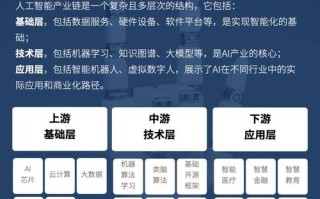
这份PPT结构清晰,内容全面,既适合作为大学新学期的课程介绍,也适合作为企业内部培训的开场,它涵盖了从课程目标、内容大纲到评估方式等所有关键信息,并配有演讲者备注,方便您进行讲解。
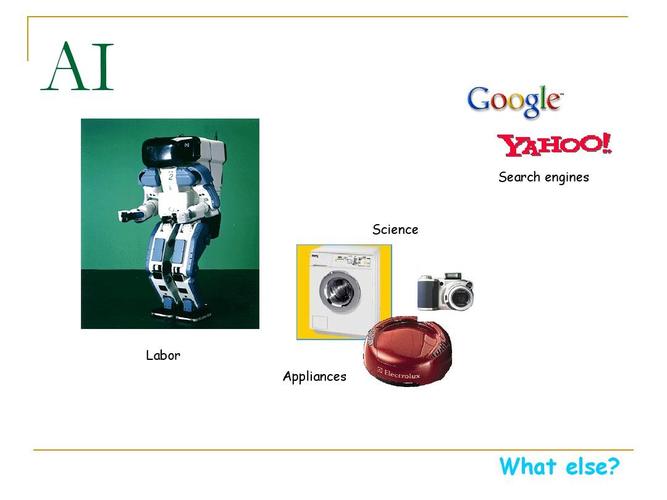
您可以根据自己的具体课程情况(如课程级别、学时、侧重点等)轻松修改和调整。
Artificial Intelligence: Course Introduction
Slide 1: Title Slide
(Image: A futuristic, abstract image representing AI, like a neural network or a glowing brain)
Artificial Intelligence
Course Introduction & Syllabus
Instructor: [Your Name] Email: [Your Email] Semester: [e.g., Fall 2025]
Slide 2: What is Artificial Intelligence?
(Image: A collage of AI applications: a self-driving car, a robot, a chatbot interface like ChatGPT, a medical scan being analyzed by AI)

What is Artificial Intelligence?
AI is not just one thing. It's a broad field of computer science focused on building intelligent agents—systems that can:
- Perceive their environment
- Learn from data and experience
- Reason to solve problems and make decisions
- Act to achieve specific goals
In simple terms: We will teach computers how to think, learn, and solve complex problems in ways that are traditionally considered "intelligent."
Slide 3: Why Study AI Now?
(Image: A graph showing exponential growth in computing power and data, alongside logos of major tech companies like Google, OpenAI, NVIDIA)
Why Study AI Now?
We are in the midst of an AI Revolution. Understanding AI is no longer optional; it's a critical skill for the future.
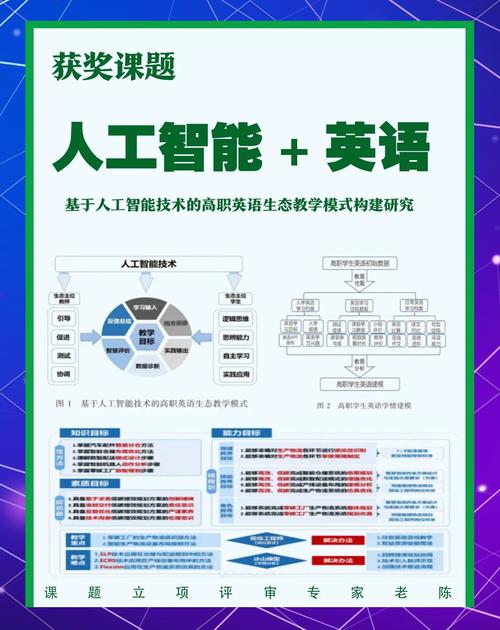
- Ubiquity: AI is everywhere (recommendation engines, voice assistants, finance, healthcare).
- Economic Impact: AI is projected to trillions of dollars to the global economy.
- Career Opportunities: High demand for AI/ML engineers, data scientists, and researchers.
- Solving Grand Challenges: AI is helping us tackle climate change, discover new drugs, and understand the universe.
Slide 4: Course Objectives
(Image: A checklist or a target/bullseye graphic)
By the End of This Course, You Will Be Able To:
- Understand the Fundamentals: Grasp core AI concepts, history, and different approaches (Symbolic, Machine Learning, Deep Learning).
- Master the Core Algorithms: Implement and explain classic AI algorithms (e.g., Search, Optimization, Planning).
- Apply Machine Learning: Build, train, and evaluate basic Machine Learning models for common tasks (e.g., classification, regression).
- Explore Deep Learning: Get a hands-on introduction to neural networks and frameworks like TensorFlow or PyTorch.
- Analyze AI's Impact: Critically discuss the ethical and societal implications of AI.
- Communicate Effectively: Clearly explain complex AI concepts to both technical and non-technical audiences.
Slide 5: What We Will Cover (Course Outline)
(Image: A visual roadmap or a flowchart showing the progression of topics)
Our Learning Journey
We will progress from the foundations to the cutting edge:
- Introduction to AI
What is AI? History, State of the Art.
- Problem Solving & Search
Problem Formulation, Uninformed Search (BFS, DFS), Informed Search (A*).
- Knowledge, Reasoning & Planning
Logic, Representing Knowledge, Planning Agents.
- Introduction to Machine Learning
The ML Paradigm, Supervised vs. Unsupervised Learning.
- Supervised Learning in Depth
Regression, Classification, Evaluation Metrics.
- Unsupervised Learning
Clustering (K-Means), Dimensionality Reduction (PCA).
- Introduction to Deep Learning
Neural Networks, Backpropagation, Convolutional Neural Networks (CNNs).
- Natural Language Processing (NLP)
Text Representation, Sentiment Analysis, Chatbots.
- AI Ethics & The Future
Bias, Fairness, Safety, and Societal Impact.
Slide 6: How Will You Learn?
(Image: Icons representing different activities: a laptop for coding, a group of people for discussion, a lightbulb for projects, a microphone for presentations)
A Blend of Theory and Practice
This course is designed to be interactive and applied. Your learning will come from:
- Lectures: Core concepts and theory.
- Programming Assignments: Hands-on implementation of algorithms in Python.
- Readings: Research papers and book chapters to deepen your understanding.
- Discussions: Active participation in class and online forums.
- Final Project: A capstone project where you apply what you've learned to a problem of your choice.
Slide 7: Prerequisites
(Image: A stack of books or icons representing Python, Math, and basic CS concepts)
What You Need to Know
To succeed in this course, you should have a solid foundation in:
- Python Programming: Comfortable with data structures, functions, and libraries like NumPy & Pandas.
- Mathematics:
- Linear Algebra: Vectors, matrices, dot products.
- Probability & Statistics: Basic probability rules, distributions, mean, variance.
- Calculus: Derivatives and gradients (for understanding optimization).
- Basic Computer Science Concepts: Comfort with algorithms and data structures.
Don't worry if you're rusty! We will provide review materials and support.
Slide 8: Assessment & Grading
(Image: A pie chart breaking down the grading components)
How Your Grade is Calculated
Your final grade will be based on a combination of continuous assessment and a final project:
| Component | Percentage |
|---|---|
| Programming Assignments | 40% |
| Midterm Exam | 20% |
| Final Project | 30% |
| Class Participation & Quizzes | 10% |
| Total | 100% |
Slide 9: Tools & Resources
(Image: Logos of Python, Jupyter Notebook, GitHub, and a textbook)
Our Toolbox
- Primary Language: Python
- Development Environment: Jupyter Notebooks (for assignments) and VS Code (for projects).
- Key Libraries: NumPy, Pandas, Scikit-learn, Matplotlib, TensorFlow/PyTorch.
- Version Control: Git & GitHub (essential for collaboration and submitting code).
- Textbook: Artificial Intelligence: A Modern Approach (AIMA) by Stuart Russell & Peter Norvig.
- Online Resources: Course website, Piazza forum, and links to research papers.
Slide 10: Course Policies
(Image: A simple gavel or a rule book icon)
Let's Set Some Ground Rules for Success
- Academic Integrity: All work must be your own. Collaboration is encouraged on high-level concepts, but direct copying of code is plagiarism. We use plagiarism detection tools.
- Late Submissions: Assignments are due at a specific time. You have 3 "late days" for the entire semester to use on any assignment. After that, late work will be penalized.
- Communication: All course announcements will be on the website/Piazza. Check your email and the forum regularly.
- Inclusivity: Respect for all students is mandatory. We are a diverse community of learners.
Slide 11: The Final Project
(Image: A creative project showcase, like a student-built app, a robot, or a data visualization dashboard)
Your Capstone: The Final Project
This is where you get to be creative!
- Goal: Apply AI/ML techniques to solve a real-world problem.
- Timeline: Proposal -> Midpoint Check -> Final Presentation & Report.
- Ideas:
- Build a simple chatbot.
- Create an image classifier (e.g., "Cats vs. Dogs").
- Analyze a dataset of your choice to find insights.
- Develop a recommendation system.
- You are not alone! I will provide guidance and you will work in small groups.
Slide 12: Questions?
(Image: A simple, clean background with a large question mark "?" or an open invitation graphic)
Any Questions?
Let's start this exciting journey into the world of Artificial Intelligence together!
Contact Information:
- Instructor: [Your Name]
- Email: [Your Email]
- Office Hours: [e.g., Tuesdays & Thursdays, 2-4 PM, via Zoom]
- Course Website: [Link
标签: 人工智能课程英文介绍PPT模板 人工智能课程英文介绍PPT制作技巧 人工智能课程英文介绍PPT内容框架