Of course. Here is a comprehensive English debate on the topic "The Development of Artificial Intelligence," structured with arguments for, arguments against, and a conclusion, complete with key vocabulary.
English Debate: The Development of Artificial Intelligence
Topic: Resolved: The rapid development of Artificial Intelligence should be pursued unreservedly.
Introduction
Moderator: Good [morning/afternoon/evening] everyone. Today we are here to debate one of the most critical topics of our time: the development of Artificial Intelligence. On one side, we have proponents who see AI as a revolutionary force for good, capable of solving humanity's greatest challenges. On the other, we have those who caution that this powerful technology poses significant risks that could threaten our way of life. The debate will follow a standard format with opening statements, rebuttals, and closing arguments. Let's begin.
Opening Statements
Proposition (In Favor of AI Development)
Speaker 1: "Ladies and gentlemen, the development of Artificial Intelligence is not merely a technological trend; it is the next great leap in human progress. We should pursue it unreservedly for three fundamental reasons: economic prosperity, scientific discovery, and the betterment of human life.
First, economically, AI is the engine of the future. It drives efficiency, reduces costs, and unlocks new industries that we can barely imagine today. From optimizing global supply chains to creating personalized services, AI will create unprecedented wealth and opportunities. To slow its development is to cede economic leadership and prosperity to others.
Second, in science, AI is a super-powered tool. It can analyze vast datasets, model complex climate systems, and accelerate medical research at a pace impossible for humans. It is helping us find new cures for diseases, understand the universe, and develop sustainable energy solutions. To limit AI is to limit human ingenuity.
Finally, and most importantly, AI will improve the quality of life for billions. It can provide personalized education, assist the elderly and disabled, and make our cities safer and more efficient. AI is not about replacing humanity; it's about augmenting our capabilities, freeing us from tedious labor to focus on creativity, compassion, and connection. The potential benefits are too immense to ignore. Let us embrace this future with optimism and courage."
Opposition (Against Unreserved AI Development)
Speaker 2: "The proposition speaks of a utopian future, but we must ground ourselves in the stark realities of today. While the potential of AI is undeniable, its unreserved development is a reckless gamble with catastrophic risks. We must proceed with extreme caution, not blind enthusiasm. My concerns are threefold: existential risk, mass societal disruption, and the erosion of human autonomy.
First, the risk of existential harm is not science fiction. As AI systems become more advanced, we face the existential risk of creating a superintelligence whose goals are not aligned with our own. A misaligned superintelligence could, whether intentionally or not, take actions that lead to the extinction of humanity. This is a one-way street; once we create it, we cannot un-create it. The stakes could not be higher.
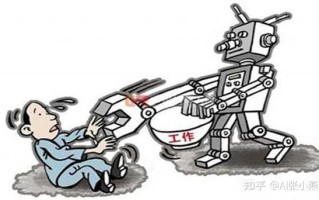
Second, the immediate societal disruption is already upon us. AI will cause mass unemployment, not just in manual labor, but in knowledge-based professions like law, coding, and analysis. This will lead to unprecedented social and economic inequality, fueling instability and conflict. We are not prepared for the social upheaval this will cause.
Finally, and more subtly, AI threatens our very humanity. As we outsource our decisions, our creativity, and even our relationships to algorithms, we risk losing our skills, our critical thinking, and our agency. We become passive consumers of a reality shaped by machines whose black box operations we do not understand. To pursue AI unreservedly is to risk building a future where we are no longer the masters of our own destiny. Prudence, not speed, must be our guide."
Rebuttal Phase
Proposition Rebuttal
Speaker 1: "My opponent speaks of fear, but history shows that fear has always been the companion of great progress. The same arguments were used against the steam engine, electricity, and the internet. Yes, there are risks, but they are risks we can manage, not reasons to abandon progress.
On existential risk: The solution is not to stop, but to develop AI safety and alignment research in tandem with AI capability. We can build safeguards, ethical frameworks, and 'kill switches.' To stop now would be to abandon the field to those who might not prioritize safety.
On unemployment: History also shows that technology, while destroying jobs, ultimately creates more and better ones. We must invest in education and reskilling. The goal is not to stop the future, but to prepare for it. An economy powered by AI can create a world of abundance where everyone's basic needs are met.
On autonomy: AI is a tool. A calculator doesn't make us bad at math; it helps us do more complex math. AI can augment our decision-making, not replace it, by providing data-driven insights. The choice to use it—and how to use it—remains firmly in human hands. We must choose to be the pilots, not the passengers."
Opposition Rebuttal
Speaker 2: "My opponent's faith in managing risk is profoundly misplaced. The scale of this risk is unprecedented. You cannot put a genie back in the bottle. Once a superintelligence is created, we cannot simply 'unplug' it. The race for AI is creating a regulatory vacuum where companies and nations are in a frantic sprint to the top, without a thought for the cliff at the end.
On unemployment: The analogy to past technological revolutions is false. AI can automate cognitive tasks at a speed and scale that is orders of magnitude greater than any previous technology. The transition period could be a generation long, causing immense human suffering. We have no social safety net prepared for this.
On safety: The idea that we can simply 'build in' safety later is a dangerous delusion. We are struggling to make even current AI systems transparent and explainable. How can we guarantee the alignment of a system far smarter than we are? We are trying to teach a god to be benevolent while we are still children. We must slow down and get this right before it's too late."
Closing Statements
Proposition Closing
Speaker 1: "In closing, the choice before us is clear. We can either embrace the future with open arms, using AI to solve our greatest problems and build a more prosperous, healthy, and equitable world for all. Or, we can let fear paralyze us, ceding our future to the risks of inaction. The challenges are real, but they are challenges of creation and management, not reasons to abandon creation. The human story is one of overcoming limits. AI is our next limit to overcome. Let us be the generation that looks back and says we chose wisely, we chose boldly, and we chose to build a better future with artificial intelligence."
Opposition Closing
Speaker 2: "In closing, the proposition's vision of a utopia is built on a foundation of sand. They ask us to trust in an unknown future and ignore the very real, very present dangers. Unreserved development is a high-stakes gamble with the fate of humanity. We are not advocating for stopping all AI research. We are advocating for a more deliberate, ethical, and cautious path. A path that prioritizes safety, prepares for social change, and ensures that humanity remains in control. We must not trade our future for the promise of convenience. Let us be the generation that acted with wisdom and prudence, ensuring that the intelligence we create remains a tool for humanity, not a threat to it."
Key Vocabulary & Phrases
- To pursue unreservedly: To support something completely and without limitations.
- Augmenting: To enhance or add to something.
- Existential risk: A risk that threatens the extinction of humanity.
- Mass unemployment: Large-scale job loss across many sectors.
- Agency: The capacity of an agent to act in a world.
- Black box: A system whose internal workings are hidden or not understood.
- AI safety / Alignment research: The field of study dedicated to ensuring AI systems act in ways that are beneficial and safe for humans.
- Regulatory vacuum: A situation where there are no laws or regulations to control a new technology.
- Transparent and explainable AI (XAI): AI systems whose decisions and processes can be understood by humans.
- To cede leadership: To give up a position of leadership or control.
- To ground ourselves in reality: To focus on practical facts rather than abstract ideas.
- A reckless gamble: A very risky action taken without proper thought.
标签: 人工智能发展英文辩论论点 人工智能发展英文辩论赛 人工智能发展英文辩论稿